
Share Tom Englander's obituary with others.
Invite friends and family to read the obituary and add memories.
Stay updated
We'll notify you when service details or new memories are added.
You're now following this obituary
We'll email you when there are updates.
Select your format and elements to print

IN LOVING MEMORY OF Tom Englander
Tom
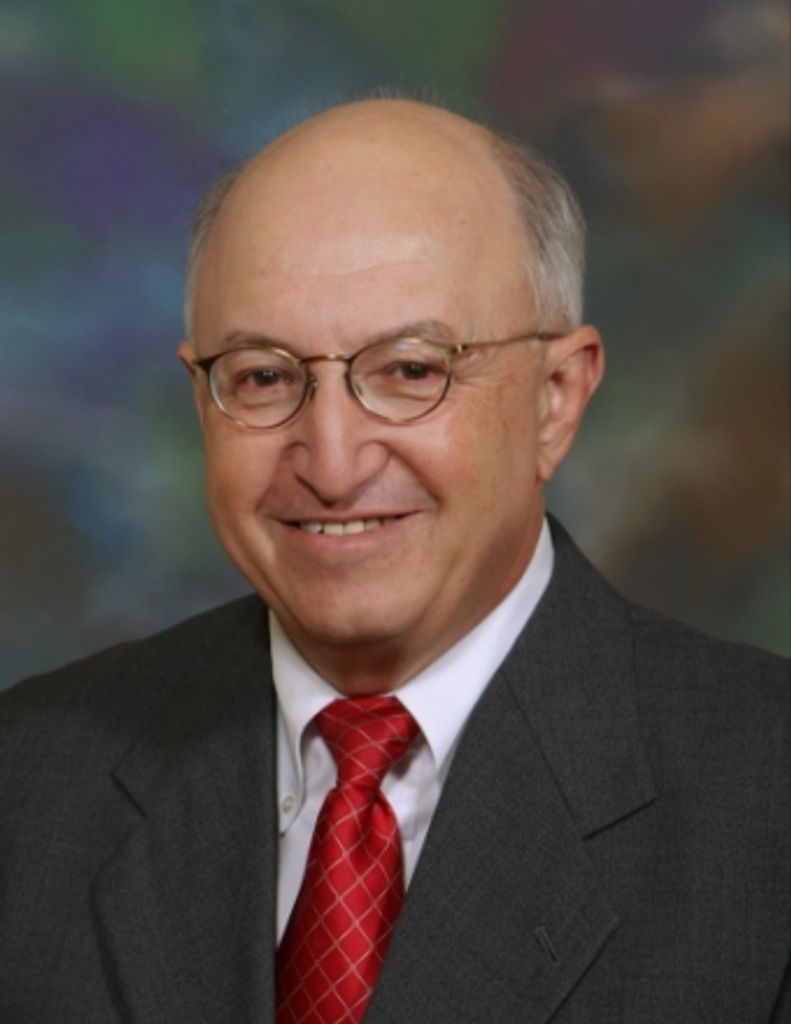
Englander
Jun 3, 1946 — Mar 1, 2025
Tom Englander's Obituary
TOM ENGLANDER
1946 - 2025
"[T]hat best portion of a good man's life; his
little, nameless, unremembered acts of kindness and of love."
Lines Written a Few Miles Above Tintern Abbey, William Wordsworth
I came upon this quotation quite by accident at the same time I was struggling with how to capture
Tom's essence, his character. He was a good man–kind, loving, and generous in ways that most
people never saw, from carrying his little brother to school on the handlebars of his bicycle at about
age 12 to encouraging me to return to school while we were still in the "friend" stage. He just lived
his life that way. His integrity and honesty guided him, and he was steadfast in his belief in fairness.
Allow me to tell you more, based in large part on a narrative of his early days that he wrote as he
faced the challenge of a stem cell transplant to treat chronic lymphocytic leukemia in 2018. His full
narrative is also posted on this website.
Tom's life journey began in Presov, Czechoslovakia, a country that no longer exists. When he was
six months old in 1947, his parents–Eugene and Gisela (Gissy) Englander–immigrated to this
country. They flew to Sweden and then crossed the Atlantic on the S.S. Drottningholm. Tom's
earliest claim to fame came when he was the first one on the ship to become seasick. Four members
of Gissy's family had left Europe before World War II, but five or six of her siblings still lived in
Europe. Three of those who left settled in Canada, and one went to what was then Palestine. Since
Eugene wanted to become an American, they made their home in Seattle.
Eugene and Gissy were Holocaust Survivors. The Nazis came to Gissy's home town when she was
16. Her parents tried to smuggle her out of the country, but something always happened, such as
guard shifts changing or the weather being too foul. She told me that, after the third attempt failed,
she just could not say goodbye to her parents again. Ultimately, all three were shipped to one of the
camps, where Gissy was put to work in a munitions factory. One day, when she came back to her
building, her parents were gone; she never saw them again. She was in three different labor camps,
until the Russians liberated the last camp and facilitated her return home. Eugene was a soccer
player, but went to work full-time in a lumber mill after he broke his arm for a third time and it
would not set correctly. As the Germans retreated through Slovakia, his friends persuaded him to
join the underground resistance, forging German documents and planning and executing "clandestine
events." Neither parent ever told their sons much about what they went through. When I came into
the family, I innocently asked Gissy lots of questions, which she always graciously answered. Both
of them lost all of their family members who were still in Europe during WW II.
After living a short time in an apartment in the University district, the family moved to the Lakeshore
Apartments, which was the "greatest place in the world to grow up" according to Tom. It was a large
complex, 400 units, so there were also a lot of kids to play with in a fenced play area with swings,
slide, teeter-totter, and sandbox. They later moved to a house, where Tom started the 9th grade in
a brand new junior-senior high school that was four blocks from home.
Tom graduated from Rainier Beach High School in 1964. He was active in sports and school
government, even running for school president his senior year. He lost that election. He later
somewhat lamented, and somewhat bragged, to me that Ernie, his younger brother by six years, ran
for almost everything and won.
While in school, Tom had a paper route, delivering the Seattle Post-Intelligencer. His route took him
near a beach, where he would meet friends to swim after he finished his route.
He next worked at the wholesale clothing store where Eugene worked. According to Tom, Gissy
(sly devil, Tom said) invited Eugene's boss to dinner, placed a juicy steak on his plate, and asked
him for a job for Tom. He worked at the store during high school and half of his college years. Tom
learned something about Eugene's sense of fairness during that time. Another employee who had
been with the store for years never knew that Tom was Eugene's son. Neither Eugene nor Tom ever
said a word about the relationship or said anything that caused anyone to guess at their relationship.
To all, Tom was just another employee.
Of course, Seattle in those days was a Boeing town. Many of Tom's friends were in the engineering
school, but Tom saw that Boeing often laid off engineers when times were not so great. Describing
himself as "an independent sort" (an understatement, if ever there was one), Tom decided to major
in math at the University of Washington. But there was a problem. He was interested in the
practical application of math, but all of his professors were theoretical mathematicians. Tom said
that they came into class, picked up a chalk, and spent the entire hour writing equations on the board
and "yammering" (Tom's word) about who knew what. He wanted to change majors, but it would
have taken an extra year to complete the course work for a different degree. As the next best option,
Tom decided to take all the computer classes he could, as well as rhetorical analysis classes, a
combination which he said was helpful in solving computer-related issues.
The year he entered college, 1964, included the beginnings of the Viet Nam War. Deciding that he
did not want to be drafted and be a private, he joined the UW ROTC. He said the first two years
were uneventful, but for the advanced program (juniors and seniors) he had to pass a physical exam.
One of the tests showed him lots of colored splotches, and the doctor declared, "Son, you are color
blind." Never having heard that before, he went to his own doctor, who also tested him. Tom was
instructed to match a bunch of small swatches with one of three big swatches. He had barely started
when the doctor interrupted, "Yes, you are!"
Tom's written narrative ends here, but we are not far in time from the merger of our stories and
journeys. He entered the Army in the Signal Corps upon graduation and was assigned to Aberdeen
Proving Grounds in Maryland to teach data processing not only to American soldiers but also to
soldiers of our various international allies. There he stayed for his entire tour of duty, after initial
training at Fort Gordon, Georgia. A benefit to being in Georgia: His uniform gained him admission
to The Masters that year.
He had applied to several graduate schools across the country, as well as the University of New
South Wales, Australia, because he wanted to earn an MBA after his discharge. As he and a friend
(also originally from Seattle) traveled back home to Seattle after discharge, they stopped at the
schools which were reasonably on their route. Most of the people in the various registrars' offices
had to dig for his file before being able to tell him about the status of his application. But not Texas
Christian University in Fort Worth. He walked into the office and said, "I'm Tom Englander." A
woman there immediately responded, "Hi, Tom! Did you get my letter?" The woman (I do not
remember her name) immediately arranged for him to have lunch with the Dean of the Business
School. Not only did he feel welcome, but TCU also offered him a full scholarship and stipend. The
woman who had been so friendly later became his landlady; his "rent" was tending bar for TCU
events. I feel lucky that Tom chose TCU instead of far-away New South Wales, whose offer he
declined because the graduate course Down Under would not start until January of the next year.
He was anxious to start school and resume civilian life.
In May 1972, after his discharge from the Army, Tom headed to Texas to start graduate school. As
he crossed into the Panhandle, the weather was very bad–raining and hailing. The radio announced
that a tornado had touched down in Dalhart, and Tom realized that this was the town he had just
passed through. It was raining and hailing so hard that he could not see well, but he needed to reach
the next town where he could find shelter. He moved into the left lane and just drove as fast as he
could in those conditions. He did reach the next town and did find shelter. Welcome to Texas, Tom.
After earning his MBA from TCU in 1973, he decided to stay in the area, and was hired by Fox &
Jacobs, a large home builder in Dallas. He moved into Greenhaven Village, which was where
Vitruvian's Savoy I apartments (for those of you who know the area near Brookhaven Country Club)
are now located and which is where he met our long-time friends, Nick and Andrea. Tom later
moved into the Foxmore on Central Expressway in 1974. It was a new complex with young adults,
who spent the summer getting acquainted by the pool. When fall came, people scattered to watch
Monday Night Football. One of the guys, Don, said he had a pool table in the living room, a pony
keg, and a television in a bedroom, and everyone was welcome. Thus, began the Monday Night
Party, which was still going long after Tom and I married.
In the meantime, I had moved to Austin in 1973 to work for a judge on the U.S. Court of Appeals
for the Fifth Circuit. Returning to Dallas in 1974, I moved into Tom's Foxmore apartment complex
in the fall. An upstairs neighbor told me about the Monday Night Party and said I should go. So at
some point in probably January or February 1975, I did. As I was being introduced, a man who was
bent over a pool cue ready to take a shot looked up and said, "Hi, Carol." And our journeys merged
50 years ago.
For a while, Tom and I were acquaintances who saw each other only on Monday nights. We were
together as groups of us went out to hockey games and such. I became so comfortable with him that
I invited him to go with me to a concert performance by duo pianists Ferrante & Teicher. After the
concert, we stopped at Pepe Gonzales on Greenville. We each had two, if not three, of those large
margaritas and talked and talked and talked. I told him that I had been thinking about returning to
undergraduate school and then law school, but was hesitant because it would take six years at the
least. His enthusiasm and unfailing encouragement helped me take the leap in July 1975.
We became very good friends. In one of our many conversations (we did like to talk), Tom said
something that I thought I would never hear out of the mouth of a man in the 1970s. I do not
remember the specifics of what we were discussing, but he said, "I cannot imagine marrying
someone who does not have her own career." I already appreciated the way he treated me, but his
comment was a revelation into the depth of his respect for women as individuals.
I was reluctant to change our relationship, but ultimately we did. By the end of 1976, we were a
couple talking marriage, until we broke up. About a month after that, he called me to ask if I wanted
to go on a road rally; we had been participating in what I called trivia rallying for about a year. I
drove during these rallies in my little Fiat X-1/9. Well, Tom drove the first time, and I read the
directions to him. Every instruction I read, he challenged and argued about–in other words, he did
not take instruction well. So I always drove after that.
I accepted his invitation to participate in the rally. We headed out from the starting point, found one
street sign that we needed, then Tom read the instruction, "turn right." After a couple of additional
turns, we soon realized we were off course. So we went back to the beginning. After our fourth
return to the beginning, I asked to see the instructions. Plain as day, they said "turn left." He was
so nervous he could not read!! As was I. Needless to say, we finished DAL (for non-golfers, that
means Dead Ass Last).
As things do, one thing led to another, and we became a couple again and married on August 7,
1977. No honeymoon, because I was in summer school.
I already knew Tom's character, but not long after we were married I came to understand how that
would play out our entire married life. When we married, I had a 17-year-old, blind, deaf toy poodle
(yes, a poodle named Heidi, whom I raised like a mutt–no yappers for me). A classmate came home
from school with me so we could study something. I let Heidi out in the backyard, and a few
minutes later my friend said that Heidi was lying down and not moving. I grabbed her limp body,
asked my friend to stay since an appliance repair person was supposed to call, and drove to the vet.
Tom's office was not far from the house, so I thought I would see if he could go with me. His car
was not in the parking lot, so I just headed for the vet I had always used. Heidi died, and I returned
home alone. I had no sooner walked in the door from our garage than Tom came in the front door
and, without saying a word, hugged me deeply. He later told me that someone from his office had
seen my car in the parking lot, and he called the house to ask why I had been there. My friend
answered and told him what had happened. He jumped in his car and drove by who knows how
many closer vet offices trying to find me and ultimately drove home.
As you know, I did not change my last name. His first reaction to that thought was, you don't think
this will last. No, this is who I am; I don't want to change who I am. He took it one step at a time.
First, he asked if, in introducing us, it would be all right if he said, "My name is Tom Englander, and
this is my wife, Carol." Sure. But it was not long before, on his own, he changed that to, "My name
is Tom Englander, and this is my wife, Carol Stephenson." This was our life together: Always and
ever, without exception, with each other we were exactly who we are.
We were married 47 years, and that was not enough. The years were filled with laughter, lots of
conversation, and tears as we both lost parents and a beloved sister-in-law. I remember the laughter
most. We laughed at the same things, and we laughed at and with each other as we each occasionally
did something that can only be called dumb. Here are a few of our stories, featuring Tom.
Not wanting an ordinary watch in the early 1980s, he bought and wore for many years a Mickey
Mouse watch. Its one tech feature was an inset with rolling calendar days. Nothing digital, of
course.
Tom and I both loathed snakes (I still do). I discovered a small one in the house late one evening
when some newspapers on the floor started moving and a tail peeked out from under the papers.
Tom woke up to my loud screech when I saw the snake. To capture the snake, we grabbed a shoe
box. And then I doubled up laughing as Tom threw the box and lid at the snake. I laughed so hard
that I could hardly utter, "What? You expected him to crawl in and close the lid?" To this day, I
laugh out loud when I think about Tom throwing that box at a snake.
Our first security system included glass breaks–that is, a sound like breaking glass would trigger the
alarm. Unfortunately, something in the bedroom or bathroom tended to rattle when big thunder
boomed and invariably the alarm went off. We became used to it when storms were around. In the
wee hours of one morning, 2:30 or 3:00, the alarm suddenly jerked us awake, and I immediately
knew this was real because there was no storm. I sat straight up, eyes wide, facing the hallway into
the bedroom. Tom leaped out of bed and said something that could have been Klingon, and I
apparently responded in Romulan. He ran over to the hall door and slammed it shut. Huh? When
we could both speak English again, he said he thought I was staring at someone in the hall. I asked
him, "What good did it do to shut that door if some stranger was already in the house?" Speaking
and understanding English again also allowed us to read the alarm display, which announced a fire
alert. The alarm company called, and Tom asked them to send the fire truck, because we had not
been able to find anything–but, please, no sirens. The firemen checked everything, found nothing,
but did suggest that it might have been a spider web or dust that floated into the smoke alarm's
vision. We soon changed alarm equipment.
When he ran his own business from home, Tom would rise every morning, have his coffee and
breakfast, dress in business casual, and walk to the other side of the house to his office, where he
worked all day.
We both played golf before we married, and Tom also played tennis. I tried to learn tennis to play
with him, but he was a terrible teacher. He stood still in the middle of his side and returned anything
I could hit. But he could redirect the ball, so that I ran from side to side and back and forth until I
was exhausted. Quickly realizing that I would have to take time from golf to practice tennis, I
informed him that I did not think the game was for me. Tom also stopped playing tennis not long
after that. A few years later when his brother Ernie was in town, Tom played tennis with him. Tom
was out of practice, and Ernie was a very good player. The upshot of that one tennis date: Tom soon
had to have surgery to fix his elbow.
Golf was very important to both of us. Tom was a very good golfer, with a natural ability that never
deserted him even when he could not play for long period, such as after elbow surgery. Brookhaven
Country Club in Farmers Branch became our second home in 1979. We joined Brookhaven just in
time to play two of the season's playdays so we could qualify for the Guys & Dolls championship,
as couples golf was then called. We won the championship. Then more than ten years later, we won
again twice, back to back. He always said that Guys & Dolls was his favorite association, and the
championship, his favorite tournament. He did, however, also enjoy Men's Golf Association and
Senior Golf Association events, and later the Super Seniors. MGA has an annual 19-man shootout.
He won that the first time he played in it, too. Then in 2011, he won the SGA's 10-man shootout.
He played his last round of golf some time shortly before his stem cell transplant in 2018; he always
missed being on the course.
When I started playing in a tournament called the Lady Bug and accumulated Lady Bug
paraphernalia, Tom complained constantly about the way my collection was growing. But he would
see something Lady Bug-ish and buy it and then wonder why we had so much.
Tom had a very varied and successful business career. He worked for a nationwide home building
company, a nationwide heavy construction company (including bridge building), a local medical
device manufacturing company, and an outplacement and coaching firm. In his first job after TCU,
he brought the home building company into the 20th Century by installing its first data processing
system. He automated the bridge company's systems, also. While I was in law school with my nose
in books and mock trial, he obtained another MBA in accounting from Southern Methodist
University. So it was natural that he would move into Controller and CFO positions. His talent for
managing and encouraging people later led him into a human resources position. Throughout his
career, though, he was no yes-man, even at the risk of his job. He had no patience for time-wasting
meetings and walked out of more than one. Not surprising, he was included in a reduction in force
at his last company not long after he walked out of a meeting, saying, "This is a waste of my time."
He started his own business in employee and management training, which was very successful. His
last business venture was with Jim, finding interim talent for businesses. It was also the business
that was the most satisfying.
Tom and I were true partners in our home and business lives. If one of us was starting a new
venture, the other would assume the primary provider role. He shut down his business and took his
last company position when I changed law firms and went on the eat-what-you-kill system.
Whatever the circumstances, we always supported each other.
Tom liked to build things. Our first house had a bonus room between the kitchen and the garage.
That room became my study room and our library, for which Tom built our very first bookshelves.
In our next, and last, house, he had the garage set up with a radial arm saw, work bench, shelves,
cabinets, all kinds of tools–you name it. Because we did not want an ordinary mail box, our architect
drew up plans for a mailbox to go with the house, and Tom built it. He rebuilt it twice, the last time
when his sight was failing. He miscut the cedar the first time, so this mailbox is smaller than the
original. When a certain seat (you know, the one in the bathroom) installed higher than it seemed
to be in the showroom, Tom built me a footstool. That was his last project. He missed being able
to take care of the house, fixing and making things.
He spoiled me. As I have said many times, I am missing the shopping gene. I worked long hours
early in my law career, like all newbies, so my avoidance of shopping escalated. But I needed work
clothes; after all, I had been in school six years wearing whatever. I would come home to find
clothes hanging in the wide doorway between our bedroom and the library. Tom had been shopping
for me. I kept the things that fit and that I liked; Tom returned the rest. And a few months later, he
would do it again. How, you may ask, did he pick clothes for me if he was color blind? He could
see some colors, but primarily chose clothes by make, shape, style, and purpose. He also asked for
help from the sales person. And I checked the colors when he brought the clothes home.
Tom was red-green color blind. Research told me that one form of this deficiency means he could
not see either red or green at all. My guess, based on 50 years of observation, is that he could see
neither color. Once, as our relationship progressed, he picked me up for a date. I do not remember
how or why this came up, but he said that he liked the pants and shirt he was wearing because he
thought the colors blended well. Pregnant pause. I gently asked him what colors he thought he was
wearing and had to tell him that those were not the colors he was wearing. I assured him, as I am
assuring you now, that he looked just fine. Neat and tidy and put-together, as always. I did learn,
however, that I needed to watch for color choices.
Tom was the person you would have wanted in an emergency. When we were in Ixtapa, Mexico,
one year, we and another couple we had met went to an island for lunch, beach, sand. Suddenly, a
loud "help" came from the water. Tom and the friend took off running toward the floundering man.
The friend was much younger and swam much faster than Tom could. Because he could see that the
man in trouble was very large, Tom grabbed an inner tube and followed our friend out. They would
never have been able to bring him back to the beach without the inner tube. They saved this man's
life.
Tom was kind, generous, thoughtful, intelligent, honest, ethical, loyal–all integrated into a great,
sometimes a little weird, sense of humor and profound integrity. He had a strong sense of what was
right and fair. He could be a determined challenger when he believed something was not being
handled fairly. But he was human. He could be stubborn as a block of granite. He would argue just
for the sake of arguing. Even though I agreed with him, he would continue to argue the point. He
could be a little bossy–no, a lot bossy. My frequent retort was, "I'm not your secretary." He could
be maddening. And as some of the stories show, he could be a little harebrained on occasion. But
there was never anything he did or said, or that I did or said out of my own foibles, that disturbed the
base of our marriage.
Everything began to change when he was diagnosed with chronic lymphocytic leukemia (CLL) in
2004. By 2008, after two separate rounds of chemo, the CLL went into remission for six years. But
it returned with a vengeance in 2014, because it had evolved into the nasty form. A stem cell
transplant became necessary in 2018, and many of you have graciously followed that difficult
journey. Tom met every challenge with grace, dignity, and courage, losing heart only when Graft
vs. Host Disease (GVHD) robbed him of most of his sight. For the last year, he was legally blind.
The process was slow, frustrating, and debilitating. In truth, he was ready to go, and in the end I had
to let him. I have lost my best friend and amazing life companion. I am so grateful that he was part
of my life as long as he could be.
Since Tom's death on March 1st, his birthday and our anniversary dates arrived and passed. For
whatever reason, we rarely engaged in elaborate plans or celebrations for either of these annual
events. In fact, we tended to forget. We were shopping for new chairs one year. The store asked
us to fill out a contact card. Tom was filling it out, looked at his Mickey Mouse watch for the date,
looked up at me, and said, "Happy anniversary." Mostly, we exchanged cards and a kiss. When his
eyesight failed and he could no longer drive, we would go to the card store, pick out a card we both
liked, sign it with both our names, and then put it on the kitchen counter so one of us could find the
"surprise" the next morning. I miss the cards and the kisses and the silliness.
Tom is survived by me, Carol; his brother Ernie (Renee); and his Canadian cousins Allan (Sherry),
Greg (Kate), Tracy (Michel), Elaine (Mel), Steven (Carol), Lesley (Richard), and all their children
and grandchildren. He is, and will always be, missed.
Tom Englander's Guestbook
Visits: 23
This site is protected by reCAPTCHA and the
Google Privacy Policy and Terms of Service apply.
Service map data © OpenStreetMap contributors