Finding Funeral Home Services When a Loved One Dies at Home
Key Takeaways
- The first call after a death at home depends on whether the death was expected or unexpected.
- Emergency responders or a medical care team may need to provide direction before funeral home transportation is arranged.
- You do not need every document or decision ready before contacting a funeral home.
- After a loved one is in care, families can move through arrangements one decision at a time.
The First Call Depends on Circumstances
After a loved one dies at home, the right first call depends on what was happening medically and whether the death was expected. A Farmers Branch funeral home can provide compassionate direction after the required notifications are complete, but funeral home transportation may need to wait for instructions from hospice, a medical provider, emergency services, or responding authorities.
There is no single procedure that fits every home death. The details matter, including whether the person was receiving hospice care, whether a physician had been involved, and whether anyone is uncertain about the cause of death. In the first few minutes, it is reasonable to slow down, take a breath, and focus only on the next necessary call.
Follow directions from the person’s care team and check your local requirements rather than relying on advice meant for another situation. Once you know who needs to be notified, a funeral director can explain what happens next and when a transfer can take place.
Was the Death Expected?
An expected death is often one that occurs while someone is receiving hospice care or ongoing medical support for a serious illness. In those circumstances, the hospice nurse, on-call team, or medical provider commonly gives the family immediate instructions and explains the next notification to make.
Keep any care-team phone numbers in an easy-to-find place if a loved one is nearing the end of life at home. That preparation does not make the moment easier, but it can reduce uncertainty about whom to call.
Unexpected Death Circumstances
An unexpected death needs a different first response. If the death was sudden, the cause is unclear, an injury may be involved, or there are concerns for anyone’s safety, contact emergency services and follow the directions you receive.
A funeral home should not be asked to bypass those steps. Responding professionals may need to complete their work before a family can arrange transportation, and waiting for that clearance protects the family from avoidable confusion later.
Signs Emergency Help May Be Needed
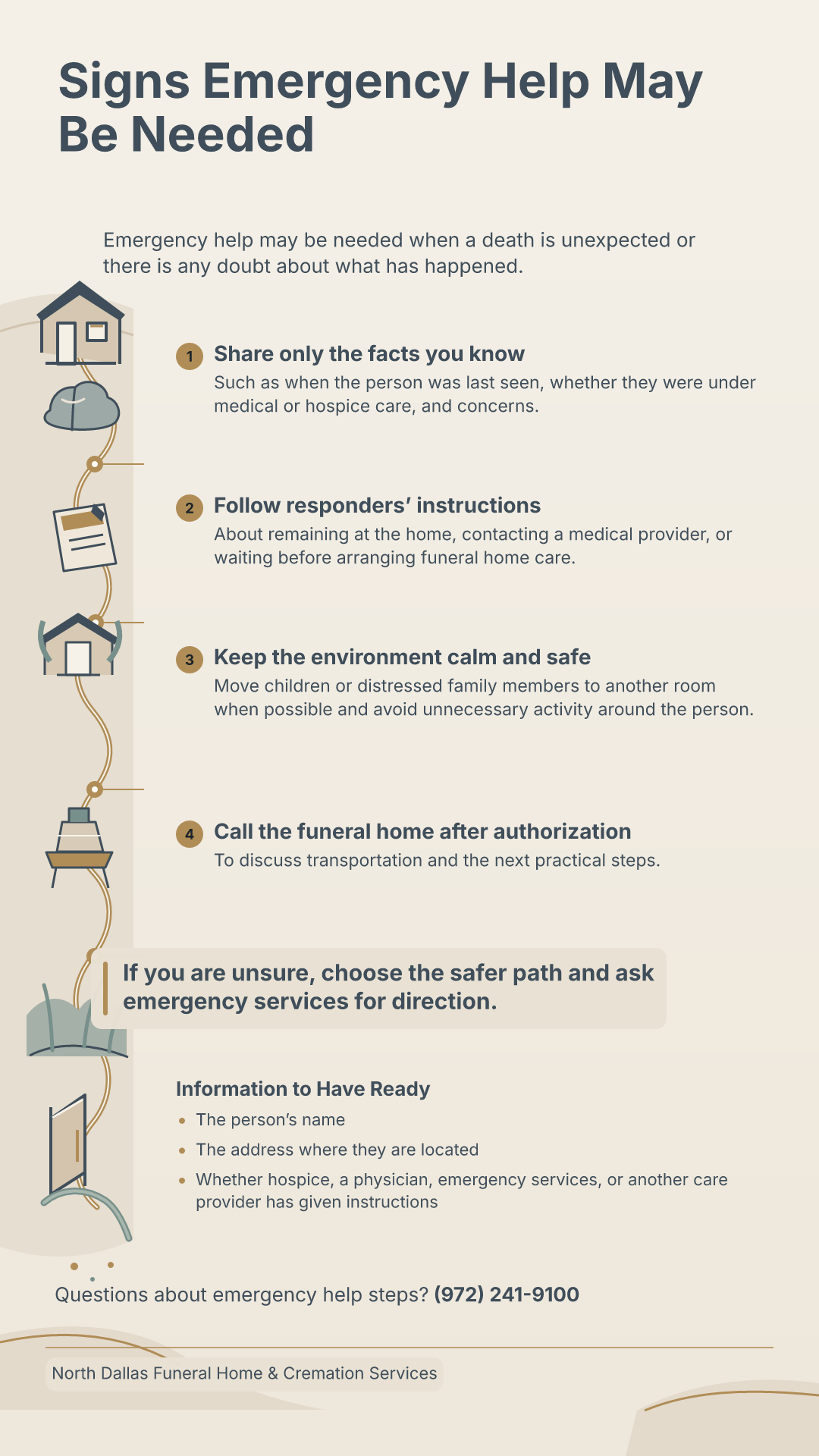
Emergency help may be needed when a death is unexpected or there is any doubt about what has happened. You do not need to make a medical determination yourself. If you are unsure, choose the safer path and ask emergency services for direction.
Take these steps in order:
- Call emergency services if the person’s death was not expected, you are unsure whether they have died, or you believe urgent medical help may still be needed.
- Share only the facts you know, such as when the person was last seen, whether they were under medical or hospice care, and whether there may have been a fall, injury, or other concern.
- Follow responders’ instructions about remaining at the home, contacting a medical provider, or waiting before arranging funeral home care.
- Keep the environment calm and safe by moving children or distressed family members to another room when possible and avoiding unnecessary activity around the person.
- Call the funeral home after authorization to discuss transportation and the next practical steps.
If hospice or a care provider has already given instructions for an expected death, follow that plan instead of assuming emergency services are required. The purpose is not to add more tasks, but to make sure the first call fits the circumstances.

Expected Deaths and Care Instructions
When a person dies at home while receiving hospice or medical care, the care team often serves as the family’s first source of direction. A nurse or provider may confirm the death, explain the immediate process, and tell the family when they may contact a funeral home for transportation.
Families sometimes worry they must act immediately. In many expected-death situations, there may be time to sit quietly with the person, notify close relatives, or gather a few personal items, provided the care team has told you that is appropriate. Follow the instructions you are given, because timing can differ by circumstance.
An expected death at home can still feel disorienting, even when everyone knew it was approaching. It is common for one family member to take the lead on calls while others begin informing relatives. Choose one point person when possible, then write down the name of each person you speak with and any next steps they provide.
Hospice and Medical Care Contacts
Hospice and medical care contacts can explain what to do immediately after an expected death. If your loved one was enrolled in hospice, call the hospice number provided to the family, including an after-hours number if needed.
The care team may ask questions about the death and guide you through what happens before transfer. Their role is different from the funeral home’s role, but both can help the family move from the first notification to the next stage of care.
When Can a Funeral Home Be Called?
A funeral home can be called once the appropriate care provider or responding authority has told the family that transportation may be arranged. If you are uncertain, call and explain the situation. A funeral director can tell you what information is needed and whether another call should happen first.
North Dallas Funeral Home & Cremation Services has a dedicated care team to take a loved one into care, and its phones are answered by a licensed funeral director at all hours. The funeral home owns and operates its crematory and does not use a third-party removal service or crematory, which may matter to families who want continuity of care from the home through final disposition.
How Can a Funeral Home Help?
Once transportation is authorized, a funeral home can help turn a confusing situation into a manageable series of choices. A Farmers Branch funeral home may coordinate the transfer, explain paperwork, and talk through burial, cremation, visitation, or ceremony preferences without expecting every decision at once.
| Need After Notification | Funeral Home Support | What Families Can Decide Later |
|---|---|---|
| Transportation | Coordinate transfer after authorization | Timing of arrangements meeting |
| Initial details | Gather essential contact information | Full obituary information |
| Required documents | Explain documents and next steps | Personal records and photos |
| Final disposition | Discuss burial or cremation preferences | Service location and format |
| Honoring a life | Review ceremony and tribute ideas | Music, readings, and speakers |
The first conversation does not need to become a full planning meeting. It can simply establish who is in charge, where the family can be reached, and what needs to happen next.
As arrangements continue, families may choose a funeral service before cremation, a memorial gathering, a graveside service, or a simpler private farewell. Religious and cultural customs can also shape the plan. Families who wish to observe Hispanic Catholic funeral traditions can ask about ways to include prayer, scripture, a church service, or other meaningful elements.
For a broader view of the choices that may come later, review this guide to funeral care options. A separate family guide to funeral decisions may also help relatives understand the roles and decisions involved.
Information to Have Ready

You do not need every answer before making the first funeral home call. Having a few basic details available can help the conversation begin smoothly, while the rest can be handled later.
It is helpful to know the person’s name, the address where they are located, and the best phone number for the family member making decisions. Share whether hospice, a physician, emergency services, or another care provider has given instructions about when transportation may occur.
If the family knows of any immediate wishes, mention them. That may include a preference for burial or cremation, a faith tradition to honor, or whether close relatives want time together before the transfer. Do not delay a call because you cannot find documents, choose a service type, or reach every family member right away.
Writing down questions as they arise can also help. Grief can make even familiar details hard to hold onto, and a short written list gives the family something steady to return to.
A Calm Next Step for Families
If you are still unsure what to do, begin with the circumstances of the death and follow the instructions of hospice, a medical provider, or emergency responders. After required notifications are complete, choosing a trusted Farmers Branch funeral home can help you ask clear questions about timing, transportation, documents, and the support available to your family.
North Dallas Funeral Home & Cremation Services can talk through the next appropriate step without requiring you to have every decision made. Call (972) 241-9100 to speak with a funeral director about your family’s situation.